HALOPHYTES ARE PLANTS ADAPTED TO SALINE SOILS
393 Vast areas of arid regions of the planet, characterized by harsh climatic conditions, have long been considered unsuitable for life. However, even in these extreme conditions, there is a unique group of organisms known as halophytes – plants that have adapted to high concentrations of salts in the soil and water.
Amazing pioneers of saline soils, halophytes, plants that challenge adverse conditions and not only survive, but sometimes amaze with their resilience and beauty.
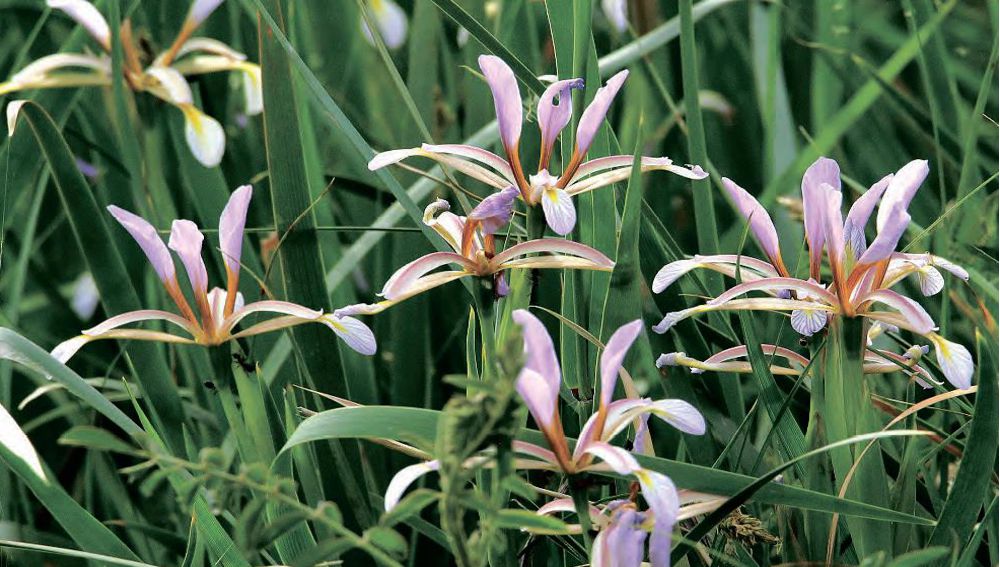
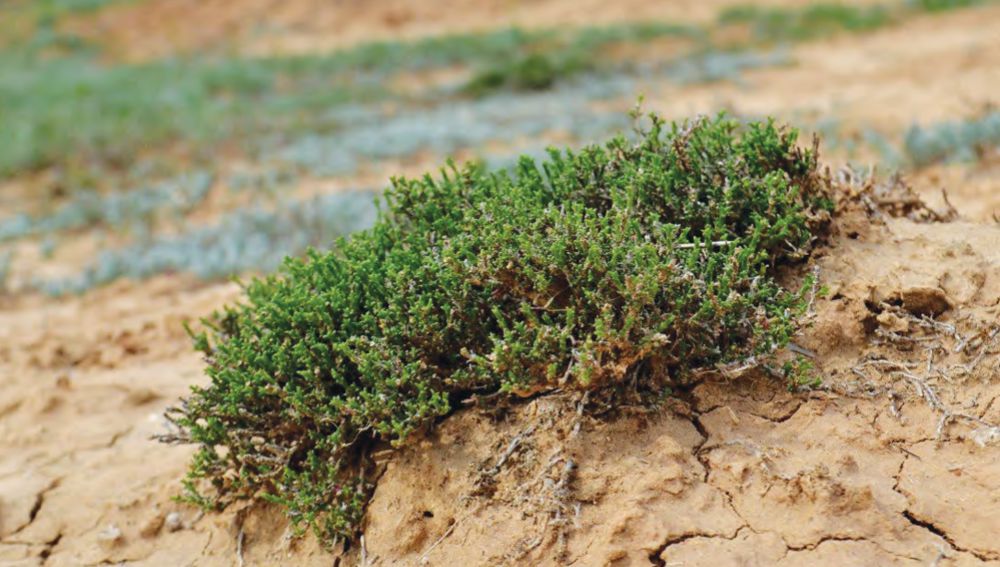
Halophytes are not just one species, but a whole group of diverse plants belonging to different families and having the most fantastic shapes. Some look like miniature corals, others spread along the ground like green carpets, others stretch upward, rushing towards the scorching sun. And each of them has developed their own unique ways to combat the salt element.
According to the Food and Agriculture Organization of the United Nations (FAO), almost 1,4 billion hectares of land (more than 10% of the total land area) have already suffered from salinization, and another 1 billion are under threat. Soil salinization is a serious environmental problem, since it accelerates the process of desertification, which is especially relevant for regions with dry or arid climate. Soil is considered saline if it contains more than 0,25% of easily soluble mineral salts. In such an environment, ordinary plants, called glycophytes, cannot survive. High concentrations of salts create powerful osmotic pressure, due to which the plant’s root system cannot absorb water from the soil. As a result, the plant dies from dehydration. Halophytes, on the contrary, are ideally adapted to such conditions. They have evolved to cope with excess salts, absorb water and maintain internal water balance.
The world gene pool of halophytes includes 2000–2500 species. In Central Asia, 760 species belonging to 34 families have been registered. These plants are a valuable genetic resource for agriculture and ecology, since they are able to develop saline and low-yield lands.
Halophytes are real survival engineers. They have developed several basic mechanisms for adaptation to excess salt concentrations:
– accumulation and dilution of salts. Halophytes of this type, called euhalophytes (or salt-accumulating), actively absorb salt from the soil and accumulate it in cell vacuoles. To neutralize its toxic effect, they dilute it with water. Their cell sap has a very high osmotic pressure, which allows them to "pull" moisture from saline soil. Such plants are often succulent – fleshy, with thick leaves and stems that can store large amounts of water. These include Salicornia herbacea, Halocnemum strobilaceum, and some species of Salsola;
– secretion of salts. Plants that belong to crinohalophytes (or salt-secreting) easily pass a salt solution through the cytoplasm. They remove excess salts through special glands on the leaves, dropping them in the form of solution or crystals. Often, you can see tiny crystals of salt shining on the surface of their leaves, like frost. These species include Frankenia rigens;
– limitation of absorption. Another mechanism is the limitation of salt intake at the root level. Some halophytes, such as glycohalophytes (salt-impermeable), have low salt tolerance and are found on moderately saline soils. They selectively absorb ions, preventing excess salt accumulation. Their osmotic pressure is maintained not by salts, but by increased content of organic matter. This group includes southern reed and some species of wormwood.
Among the persistent conquerors of salt lands, you can find real "champions" of survival. Carpets of fleshy saltworts are often scattered along the shores of the Caspian Sea and on saline plains, and the bizarre leaves of the Halocnemum strobilaceum are like beads strung on stems. Even the wormwood familiar to many has its own salt-resistant appearance here, and various types of quinoa, in defiance of the eco-background, hold their delicate foliage, serving as a component of the food supply.
Halophytes are widespread in arid zones, occupying vast areas in deserts and semi-deserts. They dominate on salt marshes, takyr surfaces and gypsum deserts, where other plants cannot survive. In Central Asia, they include representatives of such genera as saltwort, quinoa, saxaul, wormwood, as well as graceful Limoniums, which decorate salt marshes with bright flowers.
The resilience of these plants is not just an amazing biological feature, it is also a valuable resource. Halophytes play a huge role in the ecological transformation of the natural environment:
– combating desertification. Tree and shrub halophytes, such as black saxaul, protect soils from wind erosion. The destruction of such vegetation leads to desertification, since in harsh climatic conditions these plants create a favourable microclimate for other species. They protect national economic facilities from sand drifts and deflation, and also protect animals from strong winds and temperature changes;
– soil biomelioration. Scientists are increasingly paying attention to the ability of halophytes to restore degraded, saline lands. Many species are able to accumulate salts in the above-ground biomass, drawing them out of the soil. This process, called phytomelioration, allows desalination of the soil. After 3–7 years of such land clearing, it will be possible to use it for growing traditional agricultural crops;
– use in agriculture and industry. Many halophytes are valuable feed for livestock, especially during dry periods, when other forage plants do not vegetate. This allows low-productivity, "waste" lands to be involved in agricultural circulation. In addition, halophytes can serve as renewable sources of biofuel, oils, medicinal plants and other valuable products.
In the context of global climate change and fresh water shortage, when soil salinization becomes one of the main threats to food security, halophytes are of particular importance. They give us hope that even the most degraded lands can be restored.
The study of halophytes and their unique adaptation mechanisms is the key to the development of new, sustainable technologies in agriculture and ecology. These unpretentious and hardy plants are living evidence of the boundless wisdom of nature, capable of adapting to the harshest conditions. Perhaps they hold the key to sustainable development and conservation of agrobiodiversity in arid regions.
Gulnabat Jumamyradova, National Institute of Deserts, Flora and Fauna
Suleymandurdy Annabayev, Ecological Control Service